
If you’re deciding between a mos slide vs milled slide setup, you’re already asking the right question. Both can get a red dot on your Glock, but they do it in very different ways, and those differences show up in optic height, durability, flexibility, cost, and how the gun feels under recoil.
This is not a minor detail for a serious build. The slide is the foundation of your optic mounting system. If that interface is weak, too tall, or poorly matched to your optic, the whole setup suffers. For carry, duty, range use, or competition, your mounting choice needs to fit the job.
MOS slide vs milled slide: the real difference
An MOS slide uses a factory-style optics-ready footprint with adapter plates. The slide is cut to accept plates, and the plate is what matches your optic pattern. That gives you flexibility. If you change optics later, you usually just change the plate.
A milled slide is cut directly for a specific optic footprint. Instead of stacking optic on top of a plate, the optic sits lower in the slide itself. That usually gives you a tighter fit, lower mounting height, and a cleaner overall package.
On paper, the choice sounds simple. In practice, it depends on whether you want maximum modularity or the most dedicated mounting solution possible.
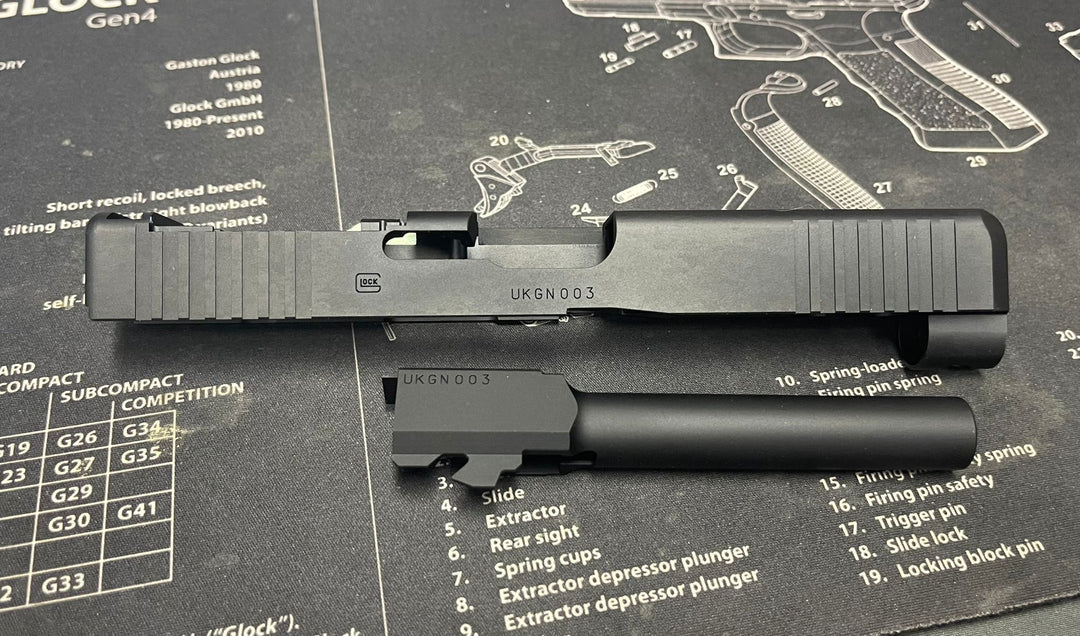
Why shooters choose an MOS slide
The biggest strength of an MOS slide is options. If you are still deciding between an RMR footprint, Holosun pattern, or another popular red dot, MOS gives you room to move. That matters for shooters who are testing different optics, switching between carry and range setups, or upgrading over time.
For many Glock owners, MOS is the easiest path to optics-ready performance without committing to one specific cut. Buy the right slide, install the correct plate, and mount the optic. That is why MOS platforms are popular with buyers who want a straightforward upgrade path and broad compatibility.
There is also a practical inventory advantage. Factory-style MOS slides and MOS-compatible models are common, familiar, and easy to build around. For the buyer who wants less guesswork, that matters.
The trade-off is height and complexity. Because the optic sits on a plate, it usually rides a little higher than it would on a direct-milled slide. That can affect sight picture, concealment profile, and how natural the dot appears during presentation. It also adds another interface in the system, which means another place where fitment and screw management matter.
A good MOS setup can absolutely run hard. But plate quality, screw length, torque, and optic match matter more than many people think.
Why shooters choose a milled slide
A milled slide is for the buyer who already knows what optic they want and wants the strongest, lowest, cleanest mount possible. Direct milling removes the extra plate layer and puts the optic deeper into the slide. That lower seating position is a real advantage.
First, the gun often points more naturally with the dot sitting lower. Second, backup iron sight integration is usually easier to optimize because you are not fighting extra height. Third, direct-fit cuts can offer a more secure interface with tighter recoil lug engagement, depending on the optic pattern and machining quality.
This is why serious performance builds often lean toward a milled slide. If the goal is a dedicated setup built to perform under pressure, direct milling is hard to beat.
The downside is commitment. A slide milled for one footprint is not automatically friendly to another. If you move from one optic family to a completely different one later, you may need a new slide, a new cut, or additional machine work. That makes a milled slide less forgiving if your preferences are still changing.
Height over bore and why it matters
One of the biggest reasons this debate keeps coming up is optic height. A milled slide usually wins here. The lower the optic sits, the less you have to hunt for the dot during presentation, especially under speed.
That lower mount can also help the gun feel more integrated, almost like the optic belongs in the slide instead of sitting on top of it. For experienced shooters, that difference is noticeable. For newer red-dot shooters, it can shorten the learning curve.
An MOS slide is not automatically too tall, and plenty of shooters run them well. But if your priority is the lowest practical optic position, direct milling is typically the better answer.
Reliability under recoil
This is where quality matters more than labels. A well-machined MOS slide with a solid plate and proper hardware can be extremely dependable. A poorly executed direct-milled cut can still cause problems if tolerances are off.
That said, the direct-milled design has fewer parts in the stack. Fewer interfaces generally means fewer opportunities for movement. That is one reason many shooters trust milled slides for heavy use.
For hard-use builds, the strongest setup is usually the one with precise machining, proper screw engagement, and a footprint matched correctly to the optic. Whether you go MOS or milled, shortcuts in machining and installation are where problems start.
Flexibility vs dedication
This is the clearest way to frame the decision.
If you want flexibility, choose MOS. It lets you adapt. It is the practical choice for buyers who are still experimenting, who own multiple optics, or who value interchangeability.
If you want a dedicated performance setup, choose a milled slide. It is the better choice when you have already settled on your optic and want the cleanest, strongest mounting solution possible.
Neither option is wrong. They serve different buyers.
Cost considerations
A lot of buyers assume MOS is always cheaper. Not necessarily. The slide itself may be competitively priced, but you also need a quality plate, correct hardware, and sometimes suppressor-height sights depending on your setup.
A milled slide may cost more upfront if you are buying a premium slide or paying for custom machining, but it can save you from stacking parts you do not really want. If your plan is to run one optic for the life of the build, a direct-milled slide often makes financial sense.
The real cost question is not just the purchase price. It is whether the setup matches your long-term use. Paying twice because you changed direction later is more expensive than choosing correctly the first time.
Which option is better for concealed carry?
For concealed carry, a milled slide has a strong case because of the lower optic profile and cleaner fit. A lower-mounted dot can reduce bulk slightly and improve presentation speed from the holster. It is also a more dedicated solution for a pistol that needs to work the same way every time.
That said, an MOS carry gun makes sense if you are still settling on your preferred optic or want the option to swap later. Plenty of carry pistols run MOS systems without issue.
If this is your daily gun and you already know your optic choice, direct milling usually feels like the smarter performance move.
Which option is better for range and competition use?
For range shooters and competitors, the answer depends on how much you experiment. If you are testing optics, comparing reticles, or changing setups often, MOS gives you more room to adjust. That flexibility is useful.
If your competition gun is built around one proven optic and one proven loadout, a milled slide is the stronger answer. It is more purpose-built, and purpose-built usually wins once the testing phase is over.
What Glock owners should keep in mind
Not every optics-ready cut is equal, and not every custom milling job is worth paying for. Precision matters. So does model-specific fitment. Glock 19, Glock 17, Glock 43X MOS, Glock 19X MOS, and long-slide or 10mm configurations all come with their own compatibility details.
That is why buying from a specialist matters. A trusted destination like USGlockSlide.com is built around platform-specific knowledge, CNC precision, and real upgrade paths for shooters who are not guessing their way through a build.
So which one should you buy?
Buy an MOS slide if you want versatility, easier optic changes, and a practical way to stay open to future upgrades. It is the smarter choice for buyers who value options.
Buy a milled slide if you want the best fit, lower optic height, and a setup that feels purpose-built from the start. It is the better choice for shooters chasing a premium, locked-in performance edge.
The right answer is not about what sounds more advanced. It is about how settled you are on your optic, how hard you plan to run the gun, and whether you want flexibility or a dedicated solution. Pick the mounting system that matches the mission, and the rest of the build gets a lot easier.
