
A red dot that shifts zero after a few hundred rounds is usually not an optic problem. It is often a cut problem. That is why a solid glock optics cut guide matters. The right cut gives you repeatable fit, correct screw engagement, proper recoil lug support, and the confidence that your Glock is built to perform under pressure.
A lot of buyers treat an optics cut like a cosmetic checkbox. It is not. The cut determines how low the optic sits, what footprints you can run, whether you need adapter plates, and how well the slide maintains strength around the ejection port and firing pin channel. If you are building a carry gun, competition setup, or range pistol, the cut choice affects reliability as much as convenience.
What a Glock optics cut guide should answer
At minimum, a real glock optics cut guide should help you answer four questions. Which optic footprint are you actually buying for. How low can the optic sit without creating clearance issues. Will the slide support direct mount or require a plate. And does the machining leave enough material for long-term durability.
Those details separate a serious setup from a parts pile. A direct-milled slide for the exact optic you plan to run usually gives the tightest fit and the lowest mounting height. A multi-optic system can offer flexibility, but flexibility always comes with trade-offs in stack height, parts count, and sometimes screw complexity.
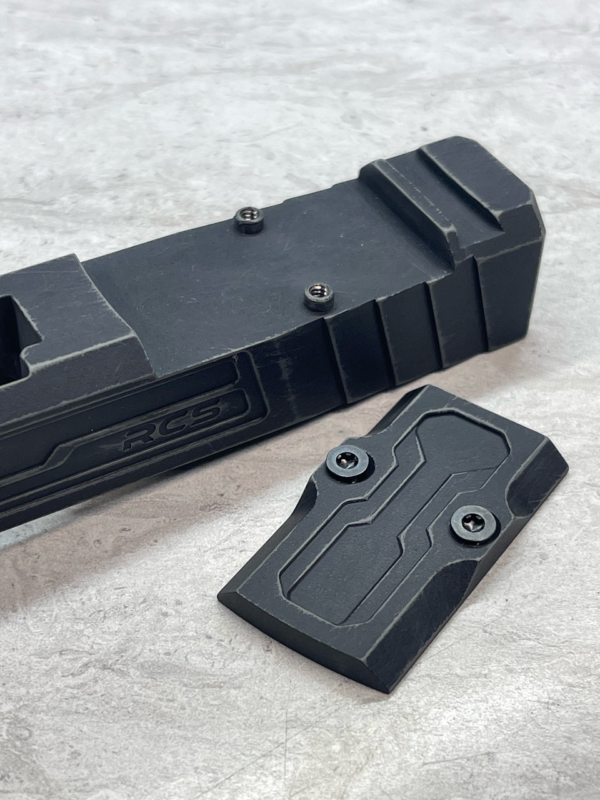
Direct mill vs MOS pattern
This is the first fork in the road. If you know exactly which optic you want, direct milling is usually the stronger choice. The optic sits lower, co-witnessing irons is easier, and the fit can be tighter because the pocket is cut around a known footprint rather than designed around an adapter system.
MOS-style setups win on versatility. If you change optics often or want the option to move between footprints, an MOS-pattern slide or plate-based system makes sense. The downside is straightforward. You add another interface between the optic and the slide, and every added interface is another place for tolerance stacking or loosening to show up.
For a duty-minded or concealed-carry gun, most experienced shooters lean toward the simplest setup that works. That usually means a quality slide with a precise direct cut for the optic you intend to keep.
Footprints matter more than brand names
A lot of newer buyers shop by optic brand first and footprint second. That is backwards. Your slide cut is based on footprint geometry, recoil bosses, screw spacing, and pocket dimensions, not just the logo on the optic.
The RMR footprint remains one of the most common standards in the Glock world, and for good reason. It is proven, widely supported, and found on many serious-use optics. RMSc and Shield-pattern cuts are more common on slimline builds where slide width and optic size need to stay compact. Holosun K-series patterns are another frequent choice for narrower carry setups. DeltaPoint Pro and other larger footprints fit different use cases, but they require deliberate planning because size, overhang, and screw placement can change the whole package.
This is where many compatibility problems start. Two optics may look close in photos and still not share the same footprint. Even small differences in recoil lug placement or screw depth can turn a simple install into a bad fit.
Depth, screw length, and recoil control
The best optics cut is not just a rectangle in the top of a slide. It is a measured pocket with the right depth, clean edges, and enough material left where it counts. A lower cut helps with presentation and backup sight height, but there is a limit. Cut too deep and you can create clearance issues around internal components or weaken the slide.
Screw length matters just as much. Too short and the optic does not have enough thread engagement. Too long and screws can bind against internal parts or protrude where they should not. This is not a detail to guess at. The optic, the cut, and the screw set all need to match.
Then there is recoil management. A quality cut should not rely only on screws to absorb recoil forces. Properly machined recoil bosses or tight indexing surfaces help the slide and optic work as a unit. That reduces stress on the screws and helps the optic stay put over round count.
How slide model changes the decision
Not every Glock slide gives you the same room to work with. A Glock 17 or Glock 19 size slide gives more real estate than a slimline platform. That affects optic size, sight placement, and how aggressive the cut can be.
On a Glock 19 or 17 build, an RMR-pattern optic often feels natural because the slide width supports it well. On a Glock 43X or 48 style build, a narrower optic usually makes more sense both for fit and for carry comfort. An oversized optic on a slim slide can work, but it may overhang and create a less refined package.
Generation and configuration matter too. Factory MOS slides, aftermarket slides, and custom-milled OEM slides all have different starting points. A purpose-built optics-ready slide is often the cleanest route if you want fresh machining and a finished package without sending your current slide out.
Iron sight planning is part of the cut
An optic cut changes your sight picture even if the irons are staying put. The lower the optic sits, the easier it is to use lower-height backup sights. The taller the mounting system, the more likely you are to need suppressor-height irons.
That is not automatically a problem, but it does change how the gun carries and how the sight picture looks. Some shooters want a lower one-third co-witness. Others want irons barely visible. Some do not want co-witness at all on a competition build. There is no universal answer, but there is a right answer for your use case.
If this is a carry gun, keep the sight package practical. Huge backup sights paired with a high-mounted optic can make the gun feel bulkier than it needs to be. A lower direct-mill setup usually gives you the cleanest balance.
Finish quality and post-cut durability
Machining is only part of the job. Once a slide is cut, the exposed metal needs proper finishing. Bare steel in a carry environment is asking for corrosion. A quality refinishing step protects the slide and keeps the cut from becoming the weak point of the build.
This is one reason many buyers prefer a complete aftermarket slide that is already optics-ready. You get a finished product built around the cut, rather than modifying a slide and handling refinishing as a separate issue. If you are sending out an OEM slide for milling, make sure the shop treats finish quality as part of the service, not an afterthought.
Common mistakes this Glock optics cut guide can help you avoid
The biggest mistake is buying the optic before confirming the footprint. The second is assuming all plate systems perform the same. The third is focusing on appearance over machining quality.
Another common miss is ignoring how the gun will actually be used. A range toy can tolerate more experimentation. A carry gun should be simpler and more proven. If your pistol needs to work every time, choose fitment and durability over novelty.
It is also worth being honest about future plans. If you know you constantly change optics, a modular system may save you money and trouble. If you already know the optic you trust, direct mill is hard to beat.
Choosing the right cut for your build
If your goal is a serious-use Glock, start with the optic you trust most, then choose the slide cut that supports it directly. That keeps the setup low, tight, and mechanically straightforward. If your goal is flexibility across multiple optics, an MOS-compatible option can be the better fit, but only if you use quality plates and hardware.
For compact and full-size Glock builds, the market gives you plenty of room to optimize around proven footprints. For slimline pistols, be more selective. Width, overhang, and concealment all become bigger factors. The best cut is the one that matches the slide, the optic, and the role of the pistol without forcing compromises you will notice later.
Shoppers looking for premium Glock slide options and precision-machined optics-ready configurations usually do best with a specialist rather than a generic parts seller. That is where a focused source like USGlockSlide.com makes sense – you are buying from a trusted destination built around Glock performance, fitment, and serious customization.
A good optics cut should disappear once the gun is built. You should not be thinking about shifting zero, loose screws, odd sight height, or footprint guesswork. You should be thinking about shooting. Pick the cut with the same discipline you use to pick the optic, and the whole pistol will feel more dialed in from the first round forward.
